Showing posts with label Peugeot. Show all posts

Saturday, 24 November 2012

Shoestring Superminis

By Leo Kimitri


Thanks to the rapidly increasing cost of insurance (and of course petrol, road tax, servicing etc.), car ownership levels among young people are plummeting. In a bid to soften the blow, Peugeot is extending its “Just Add Fuel” scheme which rolls all major motoring costs into one fixed monthly payment, so that it now covers drivers as young as 21. While this still leaves under 21s out in the cold, at least those residing in the hinterland between 21 and 25 now have another option when they come to buy a car. But just how tempting is Peugeot’s three year long package?

Well, a 21 year old can expect to pay £215 per month for a 107 Active, which includes comprehensive insurance, road tax (which Peugeot neglects to mention is free on this model anyway), servicing and roadside assistance. Overall, three factors affect the total cost – the car chosen, the owner’s postcode and the age of the youngest named driver. This all means that if you live in a postcode with high car crime for instance you’ll no doubt have to shell out much more than that, but whatever the price you pay, you’ll know exactly how much your car will cost to run every month for three years.

However, as with all finance deals, Peugeot’s “Just Add Fuel” scheme is not that straightforward – it really should have been called “Just Add Fuel and Deposit”. That’s because a 21 year old paying £215 per month would need to stump up the princely sum of £1,633 for a deposit too. And if you have to find £1,633 to pay upfront why not just spend that on a whole car? Sure you won’t have the convenience of a nice round-numbered bill every month and you won’t get a new car, but you’ll be spending much, much less in the first place.

So what can you get for £1,633? How about a 2004 Daihatsu Charade? No it’s not exciting, but it’s no less interesting than the Peugeot 107. Plus it has lots of space, will return nearly 60mpg and cost just £30 per year in road tax. You can even get several hundred pounds change from the £1633 budget if you shop around. Or, if you don’t like the Charade’s gawky looks, there are dozens of cheap, sturdy Ford Fiestas and Renault Clios available for the same price that should prove reliable and inexpensive to run.
Therefore, unless you truly value convenience above cost, Peugeot’s “Just Add Fuel” is of limited value. Despite the manufacturer’s bold claims that their scheme will tackle the drop in young driver car ownership, lumping all motoring costs into one big bill instead of several smaller ones does not suddenly make motoring affordable.


Thursday, 15 November 2012

Top 10 New Car Gadgets

Many moons ago if your supermini came fitted with two wing mirrors and a stereo you were one of the lucky ones. Back then essentials such as ABS or Airbags were reserved for luxury cars costing a fortune. Today’s cars are very different and are all about gadgets and gizmos that either make life a little easier or are genuine safety solutions. This year we have road tested over 40 models from a variety of different manufacturers that have featured a wide range of different electronic gadgets. Some have been useful, others not so. If you are wondering what options to add to your next car, read on…


Satellite Navigation

Remember the days when a map was your only way to work out where you were going? I certainly do. Thankfully times have changed with the arrival of satellite navigation which features in many new cars. Systems used to send you all over the place including farmers’ fields and the wrong way down one way streets. The systems fitted to the cars we have tried have been much better and are integrated into the car better than an aftermarket device stuck onto the windscreen.

As seen on the Peugeot 208 Allure


Reversing Camera

It sounds silly, why would you want a camera mounted on the back of your car when parking. Well, these are a lot more useful than you would think especially as the majority of new cars have awful rearward visibility. The models we have tried with a reversing camera fitted also came with parking sensors and a neat grid on the screen giving the driver an idea of exactly how much room there is behind the car. It also makes parking in bays much easier as the edges of the lines can be lined up with the grid on the screen. Kia for example have even cleverly integrated the camera screen into the rear-view mirror.

As seen on the Kia Soul Hunter


Seatbelt Warning

Years ago seat belts were not standard, seems crazy now. Today every car has them but perhaps the hardest passengers to get to buckle up are small children who often think they are a toy to be played with. The majority of new cars have seat belt warning lights and bongs to help drivers ensure everyone on-board is safe. Many MPVs go one step further by offering an individual warning light for each seat, some of the time all seven seats. For parents ferrying kids around looking out for cars with this feature is a must.

As seen on the Peugeot 5008 Allure

Lane Departure Warning

Let’s face it, overtaking isn’t difficult. For some however using indicators to tell other motorist what you are doing isn’t second nature. For this reason lane departure warning systems are a pretty good idea. Using sensors underneath the car they can detect the cars position within a given lane and alert the driver if they get too close or cross the line. Some systems have an annoying bong which will drive everyone crazy; others cause the steering wheel or driver’s seat to vibrate. It’s a system that really works. Ford have taken the system one step further and offer intervention, the car will gently steer itself back into the centre of the lane if needed, this can however be overridden.

As seen on the Ford Focus Titanium


DVD Players

Everyone loves a good movie, now you can easily watch your favourite film in your car. DVD players mounted in the rear headrests have been around for quite a while hidden on option lists. Manufacturers are now starting to fit them to some models as standard. For parents with screaming, bored kids they are a dream to have. If equipped with wireless headphones long journey can come and go with ease, some systems even have pre-loaded games. Brilliant!

As seen on the Mitsubishi Shogun SG4


Blind Spot Warning

One of the more common accidents on today’s roads is caused by drivers not seeing people, bicycles or other cars that are hidden in their blind spot. Modern cars are being fitted more and more with blind spot warning systems. These are usually neatly housed in the car’s wing mirrors consisting of a small led bulb that either lights up for flashes if the car senses an obstacle in the driver's blind spot. It’s a simple system that really can be trusted.

As seen on the Volvo XC60 R-Design Lux


HDD Music Drive

Who frequently listens to CDs in their cars? Most people actually. This could soon be a thing of the past. In the same way that you load music onto your MP3/IPod you can do the same with your car thanks to systems offered on a series of models. If you insert a CD into the unit you will be prompted with a menu asking whether you would like to copy the CD to the units’ hard drive. In doing this you can build up a music collection just for driving. Amusingly in a handful of the press cars we have tried we have found a rather eclectic mix of music from previous road testers.

As seen on the Peugeot RCZ GT

Active City Stop

Ever driven in a built up area and a football comes rolling across the road? Most have; all too often it’s followed by a child unaware of your approach. Active City Stop systems have the ability to activate the car’s brakes at lower speeds and more quickly than the most alert driver can. The systems work surprisingly well, although difficult to test with the use of a little ingenuity their full effectiveness can be demonstrated. These systems are cropping up more and more even in low-cost city cars such as the Seat Mii and Skoda Citigo.

As seen on the Ford Focus Titanium

Intelligent Cruise Control

Cruise control has been around for years and boy is it useful on long journeys. Keeping a constant speed on motorways without the use of your feet is a great idea. Cars today take this one step further. With the help of sensors that detect the distance from the car in front. When activating the cruise control a predefined distance from the car in front can be selected. The car will brake itself if it becomes too close to the car in front and can accelerate fairly hard if needed when a gap ahead increases.

As seen on the Volvo XC60 R-Design Lux

Heated Steering Wheel

OK, you are probably thinking, why on earth would you pay for a heated steering wheel? Well, because they are brilliant. More and more cars are being fitted with this brilliant device that consists of a small element in the wheel that keeps the drivers hands nice and toasty. Most cars just have an on or off function; others have a handful of settings for different temperatures. It seems a little gimmicky but coupled with a heated seat Britain’s cold winters can be an absolute pleasure to drive around in. It’s as simple as that!

As seen on the Kia Cee’d 4 Tech

Words by Rob McSorley

Thursday, 11 October 2012

2012 Peugeot 508 Saloon FULL ROAD TEST (Josh Ross)


Peugeot 508 GT 2.2 HDI 4 dr


Background and First Impressions


Available in either saloon or estate guises and with petrol, diesel or hybrid power, Peugeot’s 508 replaces both the 407 and 607 models. The nomenclature also breaks with the 4 series badging that Peugeot employed for its mid-sized cars. This line began with the 1934 401 and included the 405 and 406 – two class leaders that helped underwrite and maintain Peugeot’s reputation as the choice for enthusiasts. Instantly recognisable for its imposing, bold flanks and nose the 508 was launched in 2011 and is a befitting replacement for the 407.

The strongest design element is the two creases that run from either side of the grille to the A pillars. Beneath these another indentation travels from the headlight to the rear lamp cluster – this complex arrangement gives a ‘layer’ effect to the metalwork. It’s a joy to behold and gives the car a striking appearance; pronounced further in the Pearl White metallic paint of the model that I had on test.


Featuring Peugeot’s recently introduced design language the 508 drew positive, intrigued glances from many motorists and pedestrians. Features like the floating grille, swept back headlights, subtly rippled bonnet and newly stylised brand emblem are present across the range, while the strongest visual links are with Peugeot’s 208 and recently revised 308 and 107 models.


Wednesday, 12 September 2012

Peugeot 2008 CONCEPT


Forging ahead with a competitive position in the B segment, Peugeot has extended its traditional position with a new, broader, all-encompassing approach. So, the 208 was designed in accordance with an ambitious specification to re-generate the small hatchback. It went on sale in Europe at the end of March 2012, and in the UK at the end of June, prior to an industrial and commercial launch in Latin America in 2013.

In Beijing earlier this year, Peugeot revealed the ‘Urban Crossover Concept' to the Chinese public, a contemplation of the motor vehicle in an increasingly urban world.

Now, at the Paris Motor Show, the Marque is presenting the 2008 Concept. This concept car gives further thrust to its international conquest strategy, for which all its talents have been mobilised. The engineers and stylists have worked together in Europe, China and Latin America to create this seductive future vehicle of the range.


The city and Peugeot evolve together


From Sao Paulo to Shanghai, from London to Kuala Lumpur, from the Cape to Moscow, the city lives, evolves and grows. The human race is becoming increasingly urban, at a rate not seen before. A new generation of city dwellers is coming alive. Connected, curious, they share numerous aspirations, regarding the way in which they keep themselves informed of news occurring across the Planet.

Peugeot has included several continents in the development of a new concept car with a view to marketing to an international clientele. So, for them, with them, the Peugeot Style teams in Paris, Shanghai and Sao Paulo have all created the 2008 Concept. It will go into production, as close as possible to its customers, first in France (Mulhouse) then in China (Wuhan) and later in Brazil (Porto Real).

The Marque mobilises its experience


With more than 15 million ‘2' series vehicles, Peugeot benefits from a credible history in the domain of compact cars. This is further reinforced by the new 208, which has re-generated the codes of the segment. Recently, the marque has acquired legitimacy in the domain of the Crossover, with the commercial success of the 3008 and the inspiration drawn from the SXC Concept Car shown at the Shanghai Motor Show in 2011.

Wishing to merge these two fields of excellence into a new vehicle, Peugeot has developed the 2008 Concept, a small vehicle combining agility, compactness, versatility and a striking style for young-minded city dwellers who love the city, while also loving to escape from it.

Its unique identity originates from the marriage of the elegance and refinement of the hatchback, the impertinence and mischievousness of the SUV combined with remarkable versatility and occupant space for this segment. Capitalising on the process of re-generation unveiled by the 208, the urban nature of the 2008 Concept is established by compact dimensions: 4.14m long and 1.74m wide.

A unique style, combining elegance and strength


The 2008 Concept naturally bears the stylistic codes of the Marque. With its athletic and sleek lines it imposes its bold posture which overturns and reinvents the standards of the larger vehicles in the small-vehicles segment.

It is painted fluorescent yellow with Velvet matt varnish, a very luminous colour which is full of energy. The body is punctuated with Dark Chrome details, accentuating the modernity and elegance of this concept car.

From a coherent overall volume the 2008 Concept succeeds in combining a variety of impressions. The front face is refined and full of presence, where bonnet and wings give a reassuring impression of protection and strength. This perception is identical at the rear where the shape combines solidity with dynamism.  The profile unites the two faces by means of the slender link which begins with the inclined windscreen and continues with the continuous roof line to the spoiler. And so a profiled and very aerodynamic silhouette is outlined. The side lines, traced in the direction of the road, give the impression of a lively, sleek and dynamic vehicle.

The 2008 Concept pays particular attention to detail. The ‘floating grille' has a design cut into the metal, combined with a sophisticated dual-aspect treatment following the example of the new marque emblem. The headlamps, of a precise and unique design, bear the Peugeot identity. Their contours follow the technical functions as closely as possible and so form the sharp pupil of a cat. Chiselled in form, they are aligned with the front face, giving it an even more expressive and individual character.

The 2008 Concept also has very sensuous and sophisticated sculpted wings and sides, indicating natural athletic qualities. The large wheels, the design of their wheel arches and the ground clearance symbolise an active life without restraint; agile, versatile and lightweight.

In profile, the curve of the roof accentuates the upper decoration of the rear doors. Exclusive, cut into the metal, it appears crimped into the bodywork. This refinement also marks the precise design of the aluminium spoiler and roof bars which give the appearance of a vehicle designed for speed and leisure.

A 3-cylinder turbo petrol engine


Under its sleek bonnet the 2008 Concept is equipped with a development of the new generation 3-cylinder petrol engines. In harmony with the dynamism and power exuded by this concept car, the 1.2-litre 3-cylinder engine has a turbo and direct injection.  Developing its energy while remaining lightweight, it contributes to the versatility of the 2008 Concept with a power of 110bhp. This is combined with low fuel consumption and CO2 emissions.

Components of the Group's down-sizing strategy, these 3-cylinder engines permit a breakthrough in terms of consumption and CO2 while offering real driving pleasure.

Friday, 7 September 2012

2012 Peugeot RCZ FULL ROAD TEST

Peugeot RCZ GT THP 200 & GT HDi 163 


“Isn't she lovely, Isn't she wonderful”, poignant lyrics from the 1976 hit from the legend that is Stevie Wonder. Also words that fitted Peugeot’s reputation at the time as a maker of beautifully styled cars such as the 504 coupe with its superb rear wheel drive chassis.


Sadly since the demise of the equally brilliant 306 Peugeot seem to have lost their way a little with a wash of questionable looking models with average on road manners missing out on the sparkle that everyone used to love so much.


There was however a glimmer of hope for the french firm in the form of the 308 RC Z Concept Car that was revealed at the 2007 Frankfurt Motor Show. Opinions were unanimous - it had to be built. Fast forward to 2010 and our prayers were answered, the RCZ had made it to the market and surprisingly unscathed during the transition from concept car to production ready coupe.


Tasked with bringing back the spirit missing from previous Peugeots the RCZ has a lot to live up to.We get behind the wheel of both the range topping THP 200 and HDi 163 to find out whether the lion has got its claws back...


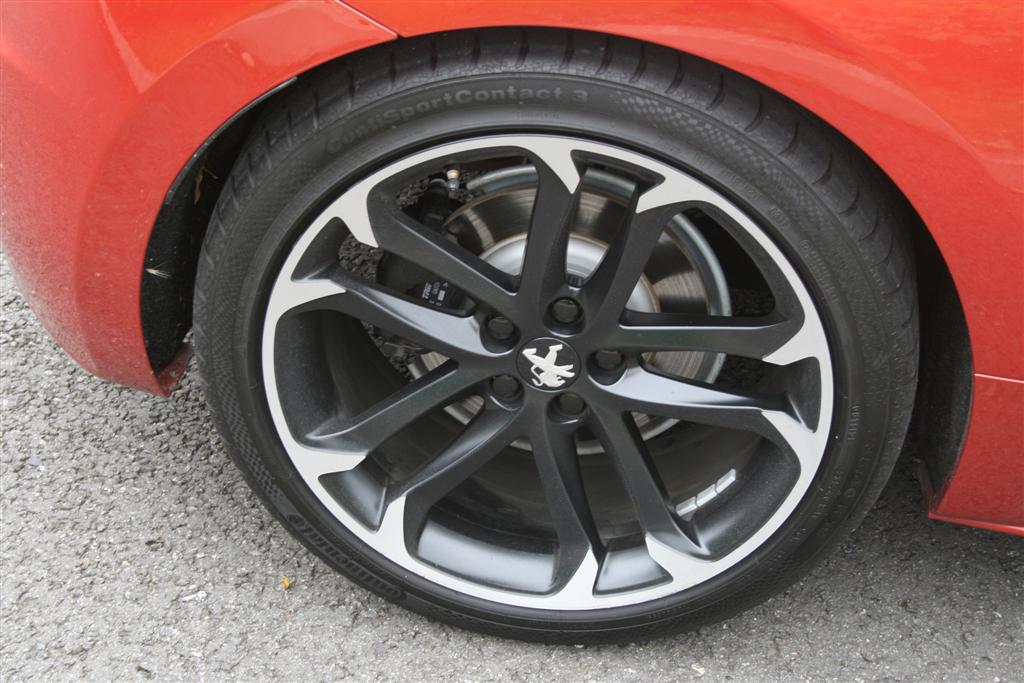
Considering the RCZs humble beginnings - based heavily on the 308 hatch- Peugeot have done  an amazing job in creating a design that turns heads. Its sleek body hunkers down on the generous 19” alloy wheels with its proud wheel arches drawing attention to the significantly widened tracks and broad rear haunches.


The front fascia is typically Peugeot with its massive gaping mouth grill and feline headlights but for the first time it seems to fit the car perfectly, almost as if it was intended for the RCZ all along.


The rear is even better with its flat deck, neatly concealed rising rear spoiler and slicked-back lights. Not to mention the oh-so-sexy double-bubble roof that wouldn't look out of place on a car costing ten times as much. Its an incredibly daring design but it manages to look sleek, sporty, sophisticated and expensive.


Inside the 308 roots are evident as the dashboard and switchgear are exactly the same which isn’t as bad as it sounds. In GT trim the whole interior is clad in quality leather, there are also racy looking dials and a plush-looking clock in place of the centre air-vent.


Everything feels well built and perfectly befitting of a premium coupe. The rest of the cabin is unique to the RCZ including the figure-hugging seats, thick carpets and so-so ergonomics. For example the handbrake is on the wrong side of the centre console which is very annoying.


The seating position is much lower in the RCZ bringing the drivers bottom nearer to the ground but there is still bags of adjustment in the driving position although visibility is restricted.


If you were thinking those rear seat will come in handy, think again - they are almost useless as the front seats don’t slide forward and even if you do manage to get into the back there is no leg or headroom. You can, however, fold the rear seats flat increasing the already generous 309 litre boot for genuine practicality.


We were lucky enough to sample the RCZ in both diesel and petrol forms and were surprised by the similarities in the two. The petrol comes in the form of a 1.6 litre THP (Turbo High Pressure) engine generating a healthy 200 bhp (with 206lb ft @1770 rpm) designed in conjunction with BMW(MINI).


The diesel powerplant is the familiar 2.0 HDi with 163bhp (with 240lb ft @2000 rpm), both are mated to the same slick-shifting 6 speed manual gearbox - although the THP 200 has a shorter shift action for quicker changes. Both engines feel similar in their responses thanks to their delivery of torque, the diesel is perfectly swift with linear power delivery and a 0-60mph time of 8.7 seconds but still managing to achieve 53.2mpg combined.


On the other hand the THP 200 sees 60 mph in just 7.6 seconds and thanks to a clever dash-membrane provides a lovely roarty soundtrack when pushed. Despite the additional power on offer 42.1mpg is achievable if driven carefully - deeply impressive for a petrol engine.


On the road you would have no idea that underneath the svelte body work lies the unimpressive 308 chassis. With its simple torsion beam suspended rear and utterly conventional macpherson strut arrangement up front you may think that the little Peugeot would struggle to raise pulses. You would be wrong!


The RCZ has much wider tracks, lowered hardened suspension and much wider tyres - not forgetting beefier brakes all round. It also has a much lower centre of gravity. The result is, well, genious.


As soon as you set of the RCZ feels poised, alert, grippy and above all - fun. Body control is superb with minimal roll in corners and bags of grip, the gearbox and steering feel perfectly weighted - the latter much heavier than you would find in a 308.


Take the RCZ through a series of challenging corners and it devours them with real vigour. We just wish the steering had a little more feedback and mid-corner ridges did not upset your driving line -  everything else is spot on. What strikes you most is how much fun can be had at sensible speeds.


The differences between the HDi diesel and THP 200 petrol depend largely on your priorities. The petrol RCZ has harder, tighter suspension than the already taught HDi resulting in marginally better body control and a crisper turn-in but a less resolved ride. The short-shift gearbox and more rev-happy  nature of the THP 200 also makes for a more enjoyable drive if a little more tiring. The HDi on the other hand perhaps strikes a more likeable balance with the addition of improved fuel economy and better refinement.


With a starting price of £21,210 for the base petrol THP 156 in Sport trim buyers get a lot of talent for very little cash. Compared to its closest rival the VW Scirocco there is a saving of around £200 to be had but considering the styling of the RCZ we think its well worth it. Top spec (special edition) Asphalt THP 200 spec will set you back just under £30,000 which although cheaper than the VW (Scirocco R) offers much less in terms of performance.


Words and Photos by Rob McSorley


Technical Data


GT THP 200

Price as tested: £25,945
Engine: 1.6 16v 200bhp - 0-62mph:7.6 secs - Maximum Speed: 146mph -
Economy: 32.1mpg (urban) –50.4mpg (extra-urban), 42.1mpg (combined) - Emissions: 146g/km (Band G) - VED (12 months): £160
Dimensions: Length: 4290mm - Width: 1845mm - Height: 1352mm - Wheelbase: 2612mm


GT HDi 163

Price as tested: £25,395
Engine: 2.0 16v 163bhp - 0-62mph: 8.7secs - Maximum Speed: 137mph -
Economy: 41.5mpg (urban) –62.7mpg (extra-urban), 53.2mpg (combined) - Emissions: 139g/km (Band E) - VED (12 months): £110
Dimensions: Length: 4290mm - Width: 1845mm - Height: 1352mm - Wheelbase: 2612mm


*data from Peugeot UK

The Verdict

The RCZ represents a real turnaround for Peugeot. Not only is it a stonkingly good car to look at and be seen in it also offers genuine driving thrills. No matter which engine or trim level you choose you will end up with a well equipped, high quality car that is sure to turn heads wherever it goes. Above all the RCZ is a rare car that does exactly what it has been designed to do but wrapped up in an affordable package with impressively low running costs. Those who cannot see past the Peugeot badge are missing out on something really special. Those who do try an RCZ are likely to fall in love with it as we did and will revel in the knowledge that Peugeot do still have the ability to build drivers cars.


You will like;
-Beautiful looks
-Thrilling drive
-Big boot
-Low running costs


You won’t like;
-Pointless rear seats
-High price in top trim level

All photographs and text are the exclusive property of Rob McSorley (except where stated otherwise). They are made available for your personal viewing enjoyment only. No images are within the Public Domain. The photographs may not be copied, reproduced, redistributed, manipulated, projected, used or altered in any way without the prior permission of Rob Mcsorley (mrrobertmcsorley@gmail.com).

Wednesday, 8 August 2012

2012 Peugeot 508 RXH Full Road Test


Last month we tested Peugeot’s very first diesel-electric Hybrid the 3008 Hybrid4 and were impressed by the technology on offer if not so much by the execution itself. However Peugeot are ploughing on and earlier this year launched its second hybrid, the new 508-based RXH.

Essentially the RXH is a 508 SW with raised suspension, beefy body moldings and underbody protection, larger wheels and the same Hybrid4 system we have seen previously. Peugeot’s sole aim is to offer buyers a large, quality, family estate capable of modest off-roading, good on-road manners with low running costs unseen before.

The RXH commands a healthy premium over the standard 2-wheel-drive 508 SW putting it in the same arena as Audi’s desirable A4 Quattro Allroad and Volkswagens newly launched Passat Alltrack. We find out whether the big cat has what it takes to rival the best Germany has to offer.


What is it?

Launched in May 2012 the 508 RXH is Peugeot's foray into the increasingly popular rugged four-wheel drive estate category. Its unique selling point is its hybrid-diesel powerplant. The RXH's biggest attraction has to be its claimed combined fuel economy in the late 60s (mpg) and meager emissions at just 107g/km. Under the skin is the familiar 508 platform with multilink rear suspension with the 37bhp electric motor mounted to it. The drivetrain is identical to that found on the 3008 Hybrid4 that we tested earlier this year. The RXH sits at the top of the 508 range with just one single, well equipped trim level which costs £33,695. Standard equipment includes luxuries such as automatic lights and wipers, cruise control, front and rear parking aids, 18” alloy wheels, panoramic roof, Bizone climate control and colour head up display. Here we are testing a fully loaded example with the addition of metallic paint, Open/Go keyless entry, full leather interior with massage function driver’s seat and Xenon directional lights with Led daytime running lights. Our car with extras comes in at £36,770.

Rivals: Volkswagen Passat Alltrack, Audi A4 Allroad, Skoda Octavia Scout

Key Features
  • 18” Alloy Wheels
  • Colour Head Up Display
  • Keyless Entry
  • Heated Leather Interior with Massage Function
  • Quad-zone Climate Control
  • Cruise Control
  • 7” Colour Satellite Navigation
  • ABS, EBFD,EBA, ESP & ASR, CBC
  • Automatic parking brake
  • Automatic lights and wipers
  • Front and rear parking sensors
Anyone that has seen a 508 SW on the road will appreciate its superb looks. With its bold creases, prominent waistline and generous dimensions it’s one of the classier cars in its class. The RXH builds on this with the addition of a new “floating” grill at the front and all new bumper with “cat-claw” LED daytime running lights. The cars ride height has been raised by 50mm for improved ground clearance and benefits from widened front and rear tracks nicely concealed by the very attractive, rugged looking plastic arch and sill extensions with chrome highlights. There is also range of new colours available exclusively to the RXH along with gorgeous 18” Attila alloy wheels. Arguable the RXH is the best looking 508 in the range; its transition from sleek estate to rugged quasi-SUV seems to have been hugely successful.

Inside is pure 508 which is not a bad starting point. Everything is sumptuously trimmed in thick, quality materials with all of the switches operating with a lovely damped action. The design itself is classy and sophisticated with a pleasing blend of black plastics with chrome accents. Differentiating the RXH from its 508 siblings is an eye-catching strip of trim that intersects the dashboard fading from black to red and back to black again also carried over to the sides of the lower centre console. Our car also had high quality leather seats with mud-coloured brown stitching.


Carrying five adults in comfort is easy in the RXH with ample head and legroom in the front and back. The seats themselves couldn’t be more comfortable with plenty of adjustment for the driver including extendable leg supports for those in the front. A rake and reach adjustable steering column makes finding the perfect driving position is easy. Unobtrusive a-pillars make for good forward visibility helped further by the elevated view out thanks to the raised suspension.

We found the Head Up Display to be a really useful gadget rising from the top of the dashboard in the drivers line of sight projecting the cars speed onto the slim piece of glass – helpfully the digits turn green when in all-electric mode. The navigation and cruise control information can also be projected onto the display in crisp colour.

Despite having a raised boot floor to house the rear electric motor and batteries luggage capacity is still decent at 423 litres -90 litres down over the standard SW-extending to 1439 litres with the seat folded down. This is likely to be plenty big enough for the majority of buyers.

At the heart of the RXH is Peugeot’s superb 1997cc 16v 163bhp common rail diesel engine mated to a robotized 6 speed manual transmission. At the rear is a 37bhp electric motor with up to 200Nm of torque powering the rear wheels. What makes this setup unique is that both power sources aren’t mechanically linked in any way. Also there is no need to plug the HYbrid4 in to charge its Nickel Metal Hydride batteries. Additionally an energy recovery system turns the electric motor into a generator during deceleration increasing the cars range.

There are a series of driving modes to choose from via the control selector mounted on the centre console. Most drivers will leave the car in Auto which cleverly juggles between power sources for optimised fuel economy. ZEV (Zero Emission Vehicle) mode is perfect for around town running on electric power alone for around two miles with the batteries fully charged. There is also a Sport mode where diesel and electric come together producing 200bhp coupled with quicker gear changes for what Peugeot calls "Dynamic Performance". Finally there is a 4WD mode for some mild off-roading.

The RXH drives very much like the conventional 508 SW. Admittedly when turning the ignition key the car generates no noise at all as the diesel engine sits in standby mode. Move the gear selector from N to A and gently push the accelerator and the car begins to silently move forward with nothing more than a whir. It’s an eerie sensation but one that’s novelty never wears off, just watch out for pedestrians who may not be aware of your approach!

Once 40 mph is reached the diesel engine seamlessly takes over providing the needed thrust for higher speeds. Stepping off the accelerator causes the % power needle fall to “charge” helpfully charging the batteries ready for the next urban encounter. At first the increased rate of deceleration takes some getting used to but drivers can feel smug that this usually wasted kinetic energy is being put to good use. The RXH also slips back into zero emissions mode when slowing down.

As we have found with the 3008 hybrid we recently tested the flaws in the gearbox still remain although to a lesser degree. In Auto mode far too often it’s found searching for the correct gear sending engine revs and noise levels soaring but gear changes are fairly smooth. There is also far too much hesitation when pulling away from junctions forcing the driver to wait for large gaps in the traffic before making a move. 

Thankfully there is a way of getting the most out of the engine and making smooth progress. We found Sport mode improved throttle response and made gear changes quicker especially when swapping cogs manually using the steering wheel paddles. In this mode you can take full advantage of the RXH’s linear power delivery and 500nM of torque combined picking up speed with real conviction. This is reflected in the sprint to 60mph taking just 8.8 seconds – up from 9.5 seconds in Auto mode. In Sport mode however economy does suffer and the RXH is not able to run in full electric mode.

Out on the road the RXH has lost some of the 508’s sparkle in terms of ride and handling. The 508 already has a firm ride but it seems that the new cars suspension has been stiffened further to counteract the additional suspension travel resulted in a ride that always feels busy picking up even the smallest imperfections and jolts over sharp ridges in the road. Despite a firmer setup the loftier suspension also tends to wallow when dealing with larger bumps. Thankfully on smoother A-roads and motorways everything settles down providing a more supple, forgiving ride. 


When tackling corners the RXH’s steering is nicely weighted and provides just enough feedback for keener drivers. Levels of body roll have increased but not by much and the brakes are powerful and fade free making for a decent drive. There is also more than enough grip from the Michelin Pilot Sport3 tyres. Refinement seems to have suffered at the arm of those grippy tyres and bluff body moldings with far too much noise filtering into the cabin making rougher surfaces more tiring than they should be.

We managed to get a deeply impressive 60 mpg from the RXH- not far off the claimed 68mpg combined- whilst with us resulting in a range of over 800 miles despite spending the majority of its time on country roads. With emissions of just 107g/km the RXH is noticeably cheaper than its rivals to tax and will be a seriously attractive proposition for business users thanks to its 12% BIK taxation. Compared to the standard 2.0 HDi diesel 508 SW combined fuel economy is likely to be around 19mpg less at 49mpg combined. Furthermore the 508 SW falls into four tax bands higher than the RXH in Band F meaning an extra £115 outlay each year.

Words and Photos by Rob McSorley 

Technical Data 

Price as tested: £36,770 
Engine: 2.0 16v 163bhp (& 37bhp electric motor) - 0-62mph: 9.5 secs - Maximum Speed: 132mph - 
Economy: 70.6mpg (urban) –67.3mpg (extra-urban), 68.9mpg (combined) - Emissions: 107g/km (Band B) - VED (12 months): £0 
Dimensions: Length: 4823mm - Width: 2068mm - Height: 1525mm - Wheelbase: 2817mm 
*data from Peugeot UK
The Verdict 3.5/5

Whilst with us we found the RXH to be a well-rounded package and excellent ownership proposition. We really liked its rugged looks and luxuriously designed interior that can easily accommodate a family of five and their luggage. We also found the fuel economy to be very good overall and the superb driving experience of the standard 508 is still there if slightly diluted. We found it hard to get on with the rougher ride quality that felt far too wallowy and the relative lack of refinement. Then there is the robotised gearbox which still has some way to go compared to those offered by rivals. In Auto mode its changes are ponderous and it’s often confused, in manual Sport mode however the RXH is much more rewarding to drive but economy suffers. Overall the RXH has a lot to offer family and business buyers alike but is only for those who are happy to spend the princely sum of nearly £34,000 on a Peugeot rather than an ultimately more desirable, prestige brand such as Audi. It is likely to come down to running costs which rivals will find hard to match.

You will like
Rugged looks
Superb cabin
Fuel economy & emissions

You won’t like
High asking price
Dim-witted gearbox
Lack of dynamic ability
So-so refinement

Special Thanks to; Peugeot Motor Company PLC, Pinley House, 2 Sunbeam Way, Coventry CV3 1ND
Related Posts Plugin for WordPress, Blogger...