Showing posts with label Road Tests. Show all posts

Wednesday, 28 November 2012

2012 Kia Cee’d 1.6 GDI DCT ‘4’ Tech FULL ROAD TEST


No this isn’t the latest premium offering from Audi or BMW, its Kia’s latest addition the second generation Cee’d. The original was the first model in the Korean giant’s line-up to really make established rivals stand up and take notice. It was a superb all-rounder that majored on value and simple design intertwined with a driving experience that was really very pleasant. This new Cee’d therefore has a lot to live up to especially as most rivals have now moved upmarket. Read on to find out if it’s any good.

It’s a right looker isn’t it? Arguably this is Kia’s finest design so far that cleverly manages to look high-end and individual at the same time. The front end sits low with a much more pronounced “tiger nose” grill with smooth sweeping projector headlights and metallic effect fog light surrounds. The side profile is equally high-class with its rising waistline and chrome framed glass area. It is worth mentioning though that this is the top spec ‘4’ Tech trim level which has the biggest wheel rims and plenty of shiny bits. Perhaps the least appealing aspect is the rear that looks a tad bland but is lifted by the sporty oval tailpipe.

Open one of the substantial feeling doors and you will find a thoroughly luxurious cabin. The design itself is very appealing borrowing much from the larger Optima. The centre console is nicely angled toward the driver bringing everything within easy reach. Build quality is unlike any other Kia before; everything is made from well chosen, quality materials that sit very well together especially with the two-tone leather of the example we tried. Cabin space is generous by class standards with lots of useful storage areas, good rear head and legroom and a generous boot.  That said rearward visibility could be better.

If you like your gadgets then the ‘4’ Tech is the model for you. It comes absolutely stuffed with everything you could ever want…and more! Standard equipment includes the usual dual-zone climate control, heated leather memory seats, rear parking camera, satellite navigation, power fold mirrors, automatic lights and wipers and cruise control to name a few. On top of this you also get Bluetooth and USB connectivity for the stereo with audio streaming and Kia’s Parallel Park Assist, Lane Departure Warning System, Flex Steer, ambient lighting and best of all, a simply brilliant heated steering wheel. The Cee’d also greets you when you get in and out via the standard fit LCD TFT high definition display ingeniously integrated into the speedo.


With talented rivals such as Ford’s superb Focus this Kia has to be good to drive to succeed. Largely it is. Although based on the same platform as the previous car with independent suspension at each corner this Cee’d has been completely retuned. It rides incredibly well even on the 17” alloys on our car managing to smother any imperfection in its path. It is also more refined than you would expect with almost a complete lack of wind or tyre roar. It handles well too feeling neutral until really pushed with plenty of grip and well controlled body roll. Undoubtedly enthusiastic drivers will find the Flex Steer system over assisted in Normal mode and even more artificial in Sport or Comfort mode making it difficult to judge what the front wheels are doing.
 
Our car came fitted with Kia’s first ever dual clutch automatic transmission called DCT which impressed us. Gear changes weren’t quite as speedy as Volkswagen’s DSG but were still very quick making the most of the 133bhp on offer. Gearchanges can also be made via the flappy paddles for a little more control. There is also a Sport mode which not only changes the speedo digits to italics but hangs onto gears for longer and tidies up throttle responses.  The Cee’d can reach 60mph in 10.4 seconds but in reality it feels much quicker than this. We really liked the relaxed nature of the engine and gearbox combination that always seemed to have enough grunt for most situations. In return we managed around 30mpg which is a little disappointing and 140g/km of co2 could be better. 


Words and Photos by Rob McSorley


Price as tested: £23,795 
Engine: 1.6 16v 133bhp - 0-60mph: 10.4secs - Maximum Speed: 121 mph - 
Economy: 35.3mpg (urban) –57.6mpg (extra-urban), 46.3mpg (combined) - Emissions: 140g/km (Band E) - VED (12 months): £120 
Dimensions: Length: 4,310mm - Width: 1,780mm - Height: 1,470mm - Wheelbase: 2,650mm 
*data from Kia UK

The Verdict

Not only is the new Cee’d better than the old model but it’s arguably the best Kia yet. It has the looks, comfort, refinement and technology to match the very best as well as a very accommodating cabin. Coupled with Kia’s superb warranty it’s a tantalising package. However we wish the driving experience felt more involving and despite all of the kit on board our ‘4’ Tech £23,795 is a lot of money for a c-segment car, especially one with a Kia badge even if it is built as well as this. We suspect that trim levels lower down in the range will make more sense, especially when equipped with Kia’s superb diesel engines. Overall the Cee’d is very impressive, just a little less than we expected.

All photographs and text are the exclusive property of Rob McSorley (except where stated otherwise). They are made available for your personal viewing enjoyment only. No images are within the Public Domain. The photographs may not be copied, reproduced, redistributed, manipulated, projected, used or altered in any way without the prior permission of Rob Mcsorley (info@robmcsorleyoncars.com).

Tuesday, 6 November 2012

2012 Volvo XC60 FULL ROAD TEST


Volvo XC60 D5 R-Design Lux Geartronic


Do you find the BMW X3 a little too common or the Audi Q3 too pretentious? If so then this Scandinavian beauty could be worth a look. Its Volvo’s second and probably best looking SUV yet; the XC60. But is it any good?

Gone are the boxy, dull lines of Volvos from over a decade ago replaced by well resolved curves and swooshes whilst still maintaining the now familiar pronounced shoulders and high-mounted taillights. In top spec R-Design Lux trim its striking design is further improved with massive 20” wheels, body skirts and plenty of matt aluminium-effect highlights. Ice white is also probably the best colour on offer to guarantee plenty of attention from passers-by.

A quick shifty inside the XC60 confirms that Volvo still make some of the best interiors in the business. Everything is not only designed to operate with simplicity but with its floating centre console and intelligent use of quality materials that look appealing and feel truly premium it really is a fantastic place to spend time. The dials are a particular joy to use with their etched aluminium effect digits lit from above with stylish blue inserts. The seats are also every bit as comfortable and supportive as they look. Cabin space all round is generous and the boot –accessed by the electrically operated tailgate - is the perfect size for several sets of golf clubs or a double buggy.


Kit levels are more than generous including alloy wheels, rear parking sensors and four electric windows, plus climate and cruise control, Bluetooth, full leather upholstery and an electrically adjustable driver’s seat. R-Design trim is the sporty choice, including a beefy body kit and a sports chassis. The example I tested also came fitted with the Nav pack, which adds voice-activated sat-nav and an upgraded stereo. The safety kit on-board is what is truly staggering; Volvo really is the industry leader in this area. The Driver support pack included a blind spot warning system, adaptive cruise control and lane departure warning all of which ensure all occupants are kept as safe as possible at all times.

Nestled under the bonnet is a rather gutsy 2.4 litre 5-cylinder diesel engine mated to a 6-speed geartronic automatic gearbox. With 215 bhp and 440 Nm of torque accessible from 1500-3000 rpm acceleration is more than adequate reaching 60 mph in 7.8 seconds. There is also the option of changing gears manually with a quick nudge of the translucent shifter. Sport mode is also worth a try quickening changes and holding onto the ratios for a little longer for speedier progress. Overall the unit is a dream to pilot, it’s beautifully refined, has bags of low-end grunt and accelerates effortlessly through all 6 gears very smoothly. Whilst with me it also proved to be brilliantly economical returning around 40mpg during mixed driving.


Volvos-of-old have always been safe cars to drive but ultimately forgettable without any driver enjoyment to be had. I am pleased to report that the XC60 couldn't be more different, thanks in part to its Mondeo-derived chassis. The steering is feelsome and perfectly weighted, the brakes are strong and progressive and grip levels are limpet-like. Much to my surprise body control is also much better than expected resisting excessive lean until really pushed making enthusiastic drives along twisty roads an absolute joy. On top of this the ride quality on offer is befitting of any luxury limousine despite those large wheels and sportier chassis settings. I also found the XC60 a refined cruiser completely encapsulating occupants from the outside world.

At £46,090 the car I am testing isn’t cheap but without the massive list of additional extras it can be yours for £38,645 which is much more appealing.  Running costs are pretty reasonable especially for a car of this size falling in to car tax band I which equates to £325 for the first year and £315 thereafter. Fuel economy is also very good with a claimed extra urban figure of 50.4 mpg that I think is achievable.


Words and Photos by Rob McSorley


Price as tested: £46,090
Engine: 2.4 20v 215bhp - 0-62mph: 7.8 secs - Maximum Speed: 127 mph –
Economy: 31.7mpg (urban) –50.4 mpg (extra-urban), 41.5mpg (combined) - Emissions: 179g/km (Band I) - VED (12 months): £325
Dimensions: Length: 4627mm - Width: 2120mm - Height: 1713mm - Wheelbase: 2774mm
*data from Volvo UK

The Verdict

 If you are looking for a medium-sized SUV with genuine driver appeal then the XC60 is definitely worth a look. Not only is it safer and better looking than the competition but it also represents better value for money and thanks to the Volvo badge on the bonnet is sure to be utterly reliable. Whilst with me I was also impressed with the performance, economy and driver thrills from the superb D5 engine. I also found the interior a sumptuous place to spend time with executive levels of refinement. What probably amazed me the most however was the safety systems on offer, all-of-which are genuinely usable and are sure to save lives. Overall I couldn't recommend the XC60 more.

All photographs and text are the exclusive property of Rob McSorley (except where stated otherwise). They are made available for your personal viewing enjoyment only. No images are within the Public Domain. The photographs may not be copied, reproduced, redistributed, manipulated, projected, used or altered in any way without the prior permission of Rob Mcsorley (info@robmcsorleyoncars.com).

Friday, 2 November 2012

2012 Suzuki Grand Vitara FULL ROAD TEST


 Suzuki Grand Vitara 1.9 DDiS SZ5


Nothing is what it seems these days in the world of 4wd vehicles.  We have some pretending to be coupes and sports hatches while others appear to be full-fat mud pluggers but actually only have front driven wheels.

The Vitara is a model that has always remained true to its original concept dating back to 1988. It's a compact off-roader that sits neatly in the middle when it comes to a balance of on and off-road prowess. In its 3rd iteration it’s a model in Suzuki's line-up that should hold plenty of appeal.


If anything it’s a concept that Land Rover cashed in on with their Freelander over a decade ago but have since disappeared off in the direction of the premium, luxury horizon leaving the Vitara where it left off. Having been on sale since 2005 how good is Suzuki’s pint sized jack-of-all-trades?


On paper the Vitara has all of the vital ingredients it needs to succeed both on and off road.  All-wheel-drive with low and high ratio lock modes, good ground clearance and short overhangs. For the road a small, frugal but perfectly formed 1.9 litre diesel engine donated by Renault and road tyres along with standard fit cruise control on this top spec SZ5 model. Not forgetting full heated leather seats.

The Test

To try and work out if the Vitara can ‘cut-the-mustard’ I decided to put it through its paces on a drive from Oxfordshire to Merseyside and back again covering a total of 400 miles in a day. Then the following day it would be time to tackle the ‘rough stuff’ to see how good the Vitara is off the beaten track. Read on to find out how it performed.

Looks

Visually the Vitara hasn’t really changed much since it was launched over 7 years ago and its still not a bad looker. It’s a simple design that’s well-proportioned and thanks to its big wheels, beefy arches and boxy shape it looks as butch as any of its rivals. The top spec model you see here also benefits from projector lights but has lost its boot mounted spare wheel to save weight making the rear look a little sorry for itself.


Refinement

Expecting any vehicle with big 18 inch wheels, high ground clearance and a squared of shape to offer luxury levels of quietness would be silly. However the Vitara most of the time is very good indeed. Wind noise is well contained and roar from the tyres only becomes tiresome on concrete motorway surfaces, both around town and on country roads passengers will remain unruffled. It also rides incredible well with enough suppleness to take the sting out of rutted roads but it has a firm edge that keeps any wallowyness at bay. The engine on the other hand can be clattery when cold and under moderate acceleration but when cruising it’s barely audible.


Running Costs

Carrying all that off road engineering around means that the Vitara tips the scales at 1654kg, which is actually not that far off a similar sized Focus. The powerplant under the bonnet misses out on the additional 8 valves of most rivals but still manages to return decent economy. The majority of our jaunt to Merseyside was traffic free but very windy. On average we returned a very good 31.9 mpg. Considering the tiny 4,500 mileage of this particular example we were more than happy even if it was some way off the claimed 42.8 mpg combined. We also thought that £195 per year (Band H) to tax this Vitara is also not to be sniffed at..

Handling

Handling and four wheel drive cars very rarely go hand-in-hand. This was another area that surprised us. Thanks to independent suspension with sensibly calibrated springs and dampers bodyroll is well controlled, grip levels plentiful and the steering beautifully weighty and much pointer than its piers. On the limit it's mechanical grip levels are reassuring and the standard fit ESP only intervenes when absolutely necessary. We didn't get on so well with the agricultural 5-speed gearbox that felt rubbery, vague and hated to be rushed. The lever also vibrates and wobbles around when stepping on and off the power with a noticeable amount of driveline shunt too.

The Cabin

Few will be disappointed with the Vitara's cabin. Space if plentiful with a good sized boot, its side mounted hinges are a great feature carried over from previous incarnations. Rear accommodation is also good for a car of this size with plenty of room for three and seats that tumble and flip forward like in an mpv. The design of the cabin upfront is very strong. Everything feels well screwed together with a good choice of soft touch materials on the dashboard top and more robust -but still very appealing - materials lower down. The design itself still looks remarkable fresh including the cowled dials and centre stack. Reach adjustment for the steering column and better lateral support for the front seats would go amiss however. Thankfully equipment levels on this top spec model were generally good if a little patchy in areas. For example Ipod/USB connectivity for the stereo and parking sensors would be a welcome addition.


Off-Road

Suzuki knows how to make small, rough and tough off-roaders as they have been doing it for years. This latest Vitara is no exception. I tested it in deep mud and rutted hilly terrain. In all cases it excelled thanks to its various lock modes. It very rarely lost traction and when it did a quick change to the diff setting and it was straight out of the mud. More impressive was that this particular Vitara was fitted with road tyres. Whichever way you look at it the Grand Vitara is head and shoulders above its piers in this area.


Words by Rob McSorleyPhotos by Mathew Brooks


Price as tested: £23,275
Engine: 1.9 8v 127bhp - 0-62mph: 13.2 secs - Maximum Speed: 106 mph -
Economy: 34.9mpg (urban) –47.1mpg (extra-urban), 42.8mpg (combined) - Emissions: 174g/km (Band H) - VED (12 months): £195
Dimensions: Length: 4300mm - Width: 1880mm - Height: 1695mm - Wheelbase: 2640mm
*data from Suzuki UK


The Verdict

Whilst with me the Grand Vitara proved that there are still cars out there that ‘does exactly what it says on the tin’. In keeping with Suzuki’s ‘no nonsense’ image the Vitara is a very decent long distance companion and is equally capable off-road. It also seems to have aged very little despite its relatively lengthy product life. Sure it isn’t perfect, the gearbox is agricultural, equipment levels are patchy and economy could be better.  What it does offer is plenty of space, a well-built interior, very good on-road handling all wrapped up in a bulletproof package that reeks of charm. For these reasons the Grand Vitara is definitely worth a look, especially considering you can park an SZ4 on your drive for a shade over £19,000.

All photographs and text are the exclusive property of Rob McSorley (except where stated otherwise). They are made available for your personal viewing enjoyment only. No images are within the Public Domain. The photographs may not be copied, reproduced, redistributed, manipulated, projected, used or altered in any way without the prior permission of Rob Mcsorley (info@robmcsorleyoncars.com)

Tuesday, 23 October 2012

2012 Suzuki Kizashi FULL ROAD TEST


Suzuki Kizashi 2.4 Sport CVT 4dr

Suzuki is world famous for its hatchbacks and four-wheel-drive models, not forgetting their motorbikes. When it was revealed that a large saloon was on the cards there was a lot of doubt over what the outcome would be. The Kizashi arrived in early 2012 and was designed with the American market in mind, we get behind the wheel to find out if this curious creation can live up to the origins of its name which in English translates to "a sign of great things to come"


Thursday, 11 October 2012

2012 Peugeot 508 Saloon FULL ROAD TEST (Josh Ross)


Peugeot 508 GT 2.2 HDI 4 dr


Background and First Impressions


Available in either saloon or estate guises and with petrol, diesel or hybrid power, Peugeot’s 508 replaces both the 407 and 607 models. The nomenclature also breaks with the 4 series badging that Peugeot employed for its mid-sized cars. This line began with the 1934 401 and included the 405 and 406 – two class leaders that helped underwrite and maintain Peugeot’s reputation as the choice for enthusiasts. Instantly recognisable for its imposing, bold flanks and nose the 508 was launched in 2011 and is a befitting replacement for the 407.

The strongest design element is the two creases that run from either side of the grille to the A pillars. Beneath these another indentation travels from the headlight to the rear lamp cluster – this complex arrangement gives a ‘layer’ effect to the metalwork. It’s a joy to behold and gives the car a striking appearance; pronounced further in the Pearl White metallic paint of the model that I had on test.


Featuring Peugeot’s recently introduced design language the 508 drew positive, intrigued glances from many motorists and pedestrians. Features like the floating grille, swept back headlights, subtly rippled bonnet and newly stylised brand emblem are present across the range, while the strongest visual links are with Peugeot’s 208 and recently revised 308 and 107 models.


Tuesday, 9 October 2012

2012 Mitsubishi Shogun FULL ROAD TEST


 Mitsubishi Shogun Black Edition Auto


Menacing isn't it? This is the Shogun Black Edition, Mitsubishi's latest addition to the rugged Shogun family which is based on the top spec SG4.  It comes drenched in standard equipment including a Rockford entertainment unit that has three DVD players, Dolby Surround sound and a music server. The fourth generation Shogun has been around for a rather long time now but is there still life in the old dog yet? We find out

If you’re a fan of swanky looking four-by-fours to wow your affluent friends look away now, this is a car for people who need a rugged car with genuine ability when the terrain turns ugly. Despite this the Shogun is still visually appealing for very different reasons.

It’s a design that has been slowly updated over the years in all of the key areas so despite the dated looking glass area and relatively short wheelbase the rest of the design is bang up-to-date. At the front there is more than a hint of Range Rover and a short overhang results in a good entry/departure angles when off-road. The side profile still looks fresh enough thanks to the absolutely massive 20” alloy wheels and swollen arches. At the back the spare wheel is traditionally mounted on the door-like tailgate and the clear rear lights look good.

The Black Edition we are testing here cranks up the look further with satin black everywhere including the front grill, mirrors, roof, door handles and those wheels. For those who find it all a little too dark can specify other colours including white, metallic silver, red and brown.

The interior is a really rather nice place to spend time, we especially liked the commanding driving position making it easy to peer over everything else on the road. The design itself is as you would expect; durable, well designed and good to look at. Everything is nicely laid out and operates with precision. It’s also pleasing that a lot of the materials are soft touch and the dials wouldn't look out of place in any other Mitsubishi and are dead easy to read. The only let-down is the brittle feeling multi-function computer on the centre console with its large pixel display and flimsy trim around the ancient-looking heated seat switches.


Cabin space is generous all-round with acres of rear leg, head and shoulder room. In the cavernous boot there are an additional pair of seats that pivot from under the floor, these also benefit from decent space for younger passengers. Those in the back will however find the pair of headrest-mounted multimedia screens an unexpected luxury. Passengers can watch DVDs, plug in USB devices, play games or even listen to different radio stations. They also come with wireless headphones to avoid annoying mum and dad in the front or coupled with the dash-mounted head-unit all passengers can watch the same movie in Dolby 5.1 Surround sound which incorporates a boot mounted Sub-woofer.

As soon as you turn the key you know you are sitting behind a pretty beastly engine. The Shogun is fitted with Mitsubishi’s 3.2 Litre 197bhp DI-DC turbo diesel mated to a 5-speed automatic gearbox. At idle there is no hiding its more agricultural roots which make for a gruff engine note. On the move refinement improves as speeds increase and when cruising on motorways when the unit is warm everything settles down. Performance isn’t blistering but at 11.1 seconds to 62mph it also isn’t bad especially considering its 2.2 tonne kerb weight. The gearbox itself is very good keeping stray revs under control with the option of swapping cogs manually with a nudge of the gear shifter.

For a car of such epic proportions the Shogun actually drives very well. Considering the massive wheels it rides well enough over most surfaces only really getting caught out around town where it can become a little choppy. The steering is also communicative enough although it can feel a little heavy. Taking corners with excess speed would be a silly idea as the Shogun serves up plenty of body roll but it always feels safe, under control and cossets passengers with minimal wind and road noise.
It will come as no surprise that Shogun excels off-road. Although its difficult to assess the cars outright ability off the beaten track we did however give it a go on a very slippery, muddy farm track. It coped very well once the locking differential was activated for optimum traction. Despite our cars standard road tyres it was impossible to get stuck which will really appeal to those who live in more rural areas.

Words and Photos by Rob McSorley


Price as tested: £41,999

Engine: 3.2 litre 16v 197bhp - 0-62mph: 11.1secs - Maximum Speed: 111mph -

Economy: 28mpg (urban) –37.7mpg (extra-urban), 33.2mpg (combined) - Emissions: 224g/km (Band K) - VED (12 months): £600

Dimensions: Length: 1430mm - Width: 1395mm - Height: 1110mm - Wheelbase: 2780mm

*data from Mitsubishi UK

The Verdict


At just under £42,000 you could be fooled into thinking that the Black Edition is expensive but when you consider the standard fit goodies on-board such as Sat nav, Reversing camera, iPod connection, Cruise control, Electric windows, Heated leather seats, and Auto lights and wipers it begins to make a better case for itself. Spec a Land Rover Discovery to the same level and you will be looking at an astonishing £55,000. Owners will however need deep pockets to run the Shogun as even when driven carefully we only managed to return 24mpg but the big fuel tank prevented too many fill-ups. Emissions are class leading putting the big Mitsubishi into Band K resulting in £600 for the first year and £260 thereafter. If you are looking for a no-nonsense, rugged off-roader unstoppable in any weather condition then the Shogun is definitely worth a look. Whilst with us we found it comfortable, refined on motorways and perfect for carrying heavy loads including the whole family. Mitsubishi are also  renowned for their bomb-proof reliability and the Shogun is perhaps the best example of this.


You will like;
-Off-road ability
-Bulletproof reliability
-Cabin space
-Rugged looks
-Standard fit equipment
You won’t like;
-Gruff engine
-Dated in places

All photographs and text are the exclusive property of Rob McSorley (except where stated otherwise). They are made available for your personal viewing enjoyment only. No images are within the Public Domain. The photographs may not be copied, reproduced, redistributed, manipulated, projected, used or altered in any way without the prior permission of Rob Mcsorley (info@robmcsorleyoncars.com).

Friday, 14 September 2012

2012 SEAT Ibiza FULL ROAD TEST


Seat Ibiza FR 1.4 TSI DSG 3dr

Since parent company Volkswagen took the reigns at SEAT in 1990 it has strived to carve the Spanish brand a neat section of the market with products that are more daring and sporty than Skodas or Volkswagens. SEAT could be described then as the wild child of the family, perhaps the unruly teenager that likes to have far too much fun.

The Ibiza has been SEAT’s best-selling model for a very long time, few realise that its been about for nearly 30 years and is now in its fourth generation. Earlier this year the Polo-based hatch received a thorough reworking to keep it fresh in the face of increased opposition. Until the new Cupra (Cup Racing) comes along the sportiest model is the FR (Formula Racing) which as of 2012 is available in a number of body styles and power outputs. We test the most potent petrol model to find out if it’s any good.

READ MORE


Friday, 7 September 2012

2012 Peugeot RCZ FULL ROAD TEST

Peugeot RCZ GT THP 200 & GT HDi 163 


“Isn't she lovely, Isn't she wonderful”, poignant lyrics from the 1976 hit from the legend that is Stevie Wonder. Also words that fitted Peugeot’s reputation at the time as a maker of beautifully styled cars such as the 504 coupe with its superb rear wheel drive chassis.


Sadly since the demise of the equally brilliant 306 Peugeot seem to have lost their way a little with a wash of questionable looking models with average on road manners missing out on the sparkle that everyone used to love so much.


There was however a glimmer of hope for the french firm in the form of the 308 RC Z Concept Car that was revealed at the 2007 Frankfurt Motor Show. Opinions were unanimous - it had to be built. Fast forward to 2010 and our prayers were answered, the RCZ had made it to the market and surprisingly unscathed during the transition from concept car to production ready coupe.


Tasked with bringing back the spirit missing from previous Peugeots the RCZ has a lot to live up to.We get behind the wheel of both the range topping THP 200 and HDi 163 to find out whether the lion has got its claws back...


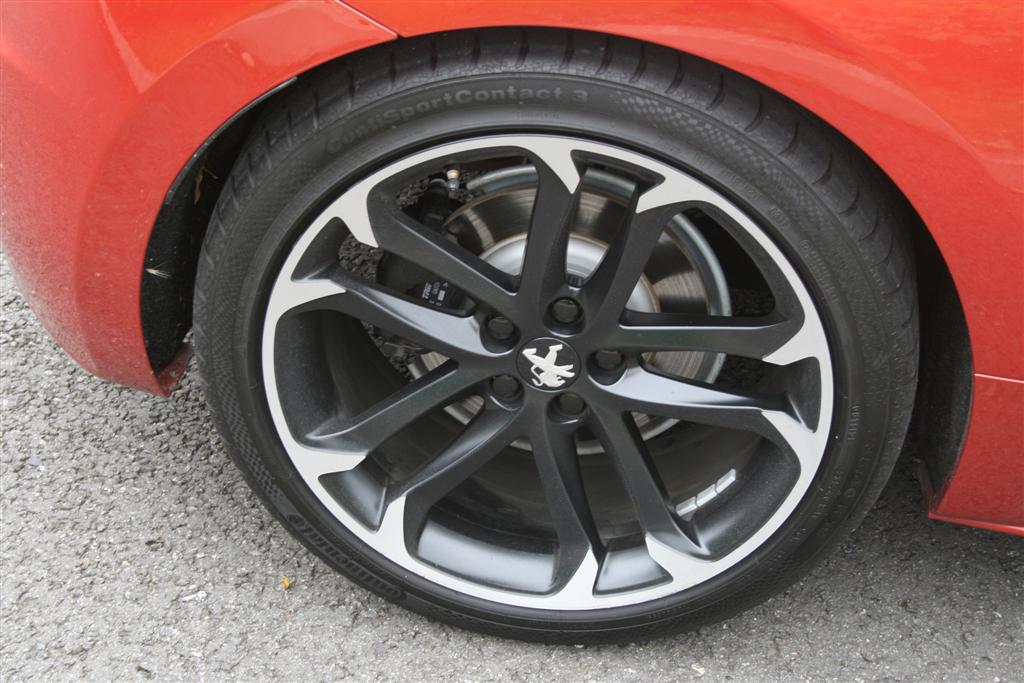
Considering the RCZs humble beginnings - based heavily on the 308 hatch- Peugeot have done  an amazing job in creating a design that turns heads. Its sleek body hunkers down on the generous 19” alloy wheels with its proud wheel arches drawing attention to the significantly widened tracks and broad rear haunches.


The front fascia is typically Peugeot with its massive gaping mouth grill and feline headlights but for the first time it seems to fit the car perfectly, almost as if it was intended for the RCZ all along.


The rear is even better with its flat deck, neatly concealed rising rear spoiler and slicked-back lights. Not to mention the oh-so-sexy double-bubble roof that wouldn't look out of place on a car costing ten times as much. Its an incredibly daring design but it manages to look sleek, sporty, sophisticated and expensive.


Inside the 308 roots are evident as the dashboard and switchgear are exactly the same which isn’t as bad as it sounds. In GT trim the whole interior is clad in quality leather, there are also racy looking dials and a plush-looking clock in place of the centre air-vent.


Everything feels well built and perfectly befitting of a premium coupe. The rest of the cabin is unique to the RCZ including the figure-hugging seats, thick carpets and so-so ergonomics. For example the handbrake is on the wrong side of the centre console which is very annoying.


The seating position is much lower in the RCZ bringing the drivers bottom nearer to the ground but there is still bags of adjustment in the driving position although visibility is restricted.


If you were thinking those rear seat will come in handy, think again - they are almost useless as the front seats don’t slide forward and even if you do manage to get into the back there is no leg or headroom. You can, however, fold the rear seats flat increasing the already generous 309 litre boot for genuine practicality.


We were lucky enough to sample the RCZ in both diesel and petrol forms and were surprised by the similarities in the two. The petrol comes in the form of a 1.6 litre THP (Turbo High Pressure) engine generating a healthy 200 bhp (with 206lb ft @1770 rpm) designed in conjunction with BMW(MINI).


The diesel powerplant is the familiar 2.0 HDi with 163bhp (with 240lb ft @2000 rpm), both are mated to the same slick-shifting 6 speed manual gearbox - although the THP 200 has a shorter shift action for quicker changes. Both engines feel similar in their responses thanks to their delivery of torque, the diesel is perfectly swift with linear power delivery and a 0-60mph time of 8.7 seconds but still managing to achieve 53.2mpg combined.


On the other hand the THP 200 sees 60 mph in just 7.6 seconds and thanks to a clever dash-membrane provides a lovely roarty soundtrack when pushed. Despite the additional power on offer 42.1mpg is achievable if driven carefully - deeply impressive for a petrol engine.


On the road you would have no idea that underneath the svelte body work lies the unimpressive 308 chassis. With its simple torsion beam suspended rear and utterly conventional macpherson strut arrangement up front you may think that the little Peugeot would struggle to raise pulses. You would be wrong!


The RCZ has much wider tracks, lowered hardened suspension and much wider tyres - not forgetting beefier brakes all round. It also has a much lower centre of gravity. The result is, well, genious.


As soon as you set of the RCZ feels poised, alert, grippy and above all - fun. Body control is superb with minimal roll in corners and bags of grip, the gearbox and steering feel perfectly weighted - the latter much heavier than you would find in a 308.


Take the RCZ through a series of challenging corners and it devours them with real vigour. We just wish the steering had a little more feedback and mid-corner ridges did not upset your driving line -  everything else is spot on. What strikes you most is how much fun can be had at sensible speeds.


The differences between the HDi diesel and THP 200 petrol depend largely on your priorities. The petrol RCZ has harder, tighter suspension than the already taught HDi resulting in marginally better body control and a crisper turn-in but a less resolved ride. The short-shift gearbox and more rev-happy  nature of the THP 200 also makes for a more enjoyable drive if a little more tiring. The HDi on the other hand perhaps strikes a more likeable balance with the addition of improved fuel economy and better refinement.


With a starting price of £21,210 for the base petrol THP 156 in Sport trim buyers get a lot of talent for very little cash. Compared to its closest rival the VW Scirocco there is a saving of around £200 to be had but considering the styling of the RCZ we think its well worth it. Top spec (special edition) Asphalt THP 200 spec will set you back just under £30,000 which although cheaper than the VW (Scirocco R) offers much less in terms of performance.


Words and Photos by Rob McSorley


Technical Data


GT THP 200

Price as tested: £25,945
Engine: 1.6 16v 200bhp - 0-62mph:7.6 secs - Maximum Speed: 146mph -
Economy: 32.1mpg (urban) –50.4mpg (extra-urban), 42.1mpg (combined) - Emissions: 146g/km (Band G) - VED (12 months): £160
Dimensions: Length: 4290mm - Width: 1845mm - Height: 1352mm - Wheelbase: 2612mm


GT HDi 163

Price as tested: £25,395
Engine: 2.0 16v 163bhp - 0-62mph: 8.7secs - Maximum Speed: 137mph -
Economy: 41.5mpg (urban) –62.7mpg (extra-urban), 53.2mpg (combined) - Emissions: 139g/km (Band E) - VED (12 months): £110
Dimensions: Length: 4290mm - Width: 1845mm - Height: 1352mm - Wheelbase: 2612mm


*data from Peugeot UK

The Verdict

The RCZ represents a real turnaround for Peugeot. Not only is it a stonkingly good car to look at and be seen in it also offers genuine driving thrills. No matter which engine or trim level you choose you will end up with a well equipped, high quality car that is sure to turn heads wherever it goes. Above all the RCZ is a rare car that does exactly what it has been designed to do but wrapped up in an affordable package with impressively low running costs. Those who cannot see past the Peugeot badge are missing out on something really special. Those who do try an RCZ are likely to fall in love with it as we did and will revel in the knowledge that Peugeot do still have the ability to build drivers cars.


You will like;
-Beautiful looks
-Thrilling drive
-Big boot
-Low running costs


You won’t like;
-Pointless rear seats
-High price in top trim level

All photographs and text are the exclusive property of Rob McSorley (except where stated otherwise). They are made available for your personal viewing enjoyment only. No images are within the Public Domain. The photographs may not be copied, reproduced, redistributed, manipulated, projected, used or altered in any way without the prior permission of Rob Mcsorley (mrrobertmcsorley@gmail.com).
Related Posts Plugin for WordPress, Blogger...